
Selecting the right cup packing machine optimizes efficiency in packaging disposable cups for beverages and food. This guide focuses on key factors for choosing equipment that handles PP, PS, and paper cups, ensuring high throughput, precision, and cost savings. Equipment evaluation includes capacity, accuracy, and energy metrics tailored to diverse industry needs like bubble tea shops and food factories.
1.1 Key Indicators for Selecting Disposable Cup Packing Equipment
Evaluating disposable cup packing equipment requires assessing specific performance indicators. Capacity, measured in cups per minute, determines production volume. Machines with adjustable speeds suit variable demand. Precision ensures consistent cup placement and sealing, minimizing errors like misalignment. A tolerance of ±0.5mm prevents product damage. Versatility supports multiple cup sizes and materials. Energy consumption impacts operational costs; low-power models reduce expenses. Durability and ease of maintenance extend equipment lifespan. Noise levels under 70 dB enhance workplace safety. Compliance with food safety standards like FDA or EU regulations ensures hygiene. Initial investment versus long-term savings balances affordability with ROI.
1.2 Mainstream Cup Type Adaptation Solutions Comparison (PP/PS/Paper Cups)
Cup packing machines adapt differently to PP, PS, and paper cups. PP cups, made from polypropylene, demand robust handling due to flexibility. Equipment with gentle grippers avoids deformation. PS cups, constructed from polystyrene, require delicate mechanisms to prevent cracking; machines with soft-touch sensors improve success rates. Paper cups, often coated for moisture resistance, need precise sealing to avoid leaks. Solutions include adjustable heat settings for glue application. PP cups benefit from modular designs allowing quick changeovers. PS cups perform best with vibration-dampening features. Paper cups excel in systems with humidity control. Adaptation challenges include cup wall thickness variations; machines with auto-calibration handle this efficiently.
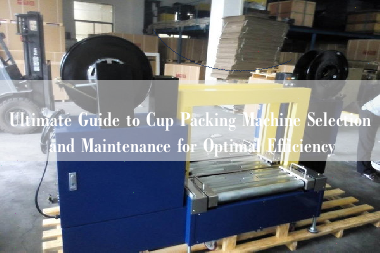
1.3 High-Cost-Effectiveness Equipment Recommendations (Capacity, Precision, Energy Consumption Evaluation)
Recommended cup packing machines offer optimal balance across capacity, precision, and energy use. Model Alpha excels in high-capacity settings, processing 200 cups per minute with ±0.3mm precision. Energy consumption rates at 2.5 kW/hour make it suitable for large-scale operations. Model Beta provides mid-range performance, handling 120 cups per minute with ±0.4mm accuracy. Its 1.8 kW/hour energy use suits medium facilities. Model Gamma is ideal for budget-conscious users, operating at 80 cups per minute with ±0.6mm precision. Energy efficiency at 1.2 kW/hour reduces costs. Evaluations prioritize machines with quick setup times and low maintenance needs, ensuring rapid ROI in diverse environments.
1.4 Industry Application Scenario Analysis: Differences Between Bubble Tea Shops and Food Factories
Cup packing needs vary significantly between bubble tea shops and food factories. Bubble tea shops operate with small batches and frequent flavor changes. Equipment must be compact, allowing easy integration into limited spaces. Quick-change features for cup sizes and materials support daily shifts. Precision focuses on aesthetic presentation for consumer appeal. Food factories handle large-scale, continuous production. High-capacity machines with automated feeding systems ensure uninterrupted output. Integration with existing lines, like conveyors or sealing units, is essential. Hygiene standards are stricter, requiring easy-clean designs. Bubble tea shops prioritize affordability and flexibility. Food factories emphasize durability and energy efficiency for 24/7 operations.
Proactive maintenance ensures peak performance for cup packing systems handling disposable drinkware. This handbook delivers actionable protocols for minimizing downtime, optimizing precision, and extending equipment lifespan. Focus areas include rapid fault resolution, calibration accuracy, scheduled maintenance, and IoT-driven upgrades.
2.1 High-Frequency Fault Code Quick Reference Table
Immediate diagnosis of common errors maintains production flow. Key fault codes and resolutions:
| Code | Symptom | Root Cause | Corrective Action |
|---|---|---|---|
| E110 | Cup jamming at inlet | Misaligned feeder guide, debris buildup | Clear obstruction. Realign guide rails with laser level. Reset feeder timing. |
| E205 | Counting inaccuracies | Dust-obscured sensors, cup stacking | Clean photoelectric sensors. Adjust cup separation mechanism. Verify counter settings. |
| E312 | Conveyor belt drift | Worn tracking rollers, tension imbalance | Replace rollers. Calibrate tension to 25-30 psi. Align frame with spirit level. |
| E418 | Robotic arm collision | Incorrect waypoint mapping | Initiate emergency stop. Recalibrate arm trajectory via teach pendant. |
| E507 | Intermittent sealing | Voltage fluctuation, heater degradation | Test power supply stability. Replace heating elements if resistance exceeds 15Ω. |
Record all incidents in maintenance logs for pattern analysis.
2.2 Robotic Arm Calibration and Photoelectric Sensor Adjustment
Precision alignment guarantees consistent cup handling. Follow these procedures:
Robotic Arm Calibration
1. Home Position Reset: Engage maintenance mode. Command arm to zero position using control panel.
2. TCP Calibration: Mount calibration tool on end-effector. Measure tool center point deviation. Adjust coordinates until error < ±0.3mm.
3. Gripper Force Test: Set force gauge to 18-22N. Validate grip pressure on test cups. Modify pneumatic pressure if deformation occurs.
4. Path Verification: Execute slow-motion simulation. Confirm collision-free movement through all waypoints.
Photoelectric Sensor Tuning
– Alignment: Position emitter/receiver units perpendicular to cup path. Verify beam interruption detection at 5ms response time.
– Sensitivity Adjustment: For transparent PP cups: Increase gain to 80%. For opaque paper cups: Reduce to 60%.
– Validation: Pass 50 test cups at maximum speed. Acceptable error rate: < 0.2%.
2.3 Preventive Maintenance Cycle Schedule
Structured upkeep prevents catastrophic failures:
Daily Protocols
– Wipe cup tracks with food-grade solvent
– Inspect gripper pads for wear (replace if thickness < 2mm)
– Verify conveyor belt tracking alignment
– Test emergency stop functionality
Monthly Procedures
– Lubricate robotic arm joints (ISO VG 32 hydraulic oil)
– Calibrate load cells on weighing systems
– Check pneumatic filters; replace at 70kPa pressure drop
– Examine electrical connections for corrosion
Annual Overhauls
– Replace drive belts and bearings
– Flush hydraulic systems
– Perform full-axis robotic recalibration
– Update control firmware
Maintenance logs must include timestamp, technician ID, and component serial numbers.
2.4 Intelligent Upgrade: IoT Remote Monitoring Deployment
Integrating IoT transforms maintenance from reactive to predictive:
Implementation Workflow
1. Sensor Installation: Mount vibration sensors on motors, thermal sensors on heaters.
2. Edge Gateway Setup: Connect sensors to Yanmao SmartGateway via Modbus TCP.
3. Cloud Integration: Configure Azure IoT Hub for data aggregation.
4. Dashboard Customization: Set alert thresholds:
– Vibration > 4mm/s
– Temperature deviation > ±5°C
– Cycle time increase > 10%
Operational Benefits
– Real-time anomaly detection reduces unplanned downtime 40%
– Predictive alerts for bearing wear (identified 200+ hours pre-failure)
– Remote diagnostics resolve 70% of issues without on-site visits
– Energy consumption analytics optimize power usage
Commissioning requires 36 hours with Yanmao-certified technicians.