
Engine Oil Case Packer: Core Value of High-Efficiency Automation
Defining Core Functions: Automated Engine Oil Packaging Workflow
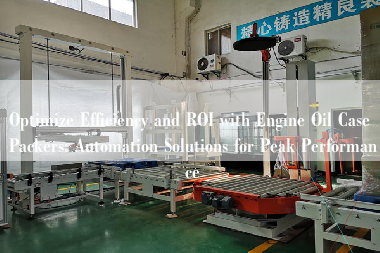
Engine oil case packers automate the transfer of filled bottles or containers into shipping cases. This specialized Case Packer integrates seamlessly with upstream automatic engine oil filling machines and downstream Case Sealers. Key functions include:
– Precise bottle orientation and grouping
– Gentle transfer into corrugated cases
– Automatic case positioning and ejection
– Real-time rejection of damaged containers
The system eliminates manual case loading while maintaining bottle integrity during high-speed operations.
Market Focus: Analyzing Automatic Engine Oil Filling Machine Price Factors
Investment decisions balance performance requirements with budget constraints. Key determinants of automatic engine oil filling machine price include:
– Throughput capacity: Systems range from 10 to 60+ cases per minute
– Material compatibility: Stainless steel construction for corrosive environments
– Automation level: Basic loading vs. integrated vision inspection
– Configuration options: Top-loading vs. horizontal loading designs
Higher initial investments typically deliver faster ROI through sustained throughput and reduced product giveaway.
Quantifiable ROI: Efficiency Gains and Waste Reduction
Operational advantages translate directly to financial returns:
– Labor reduction: One packer replaces 3-5 manual operators
– Speed optimization: Achieve 95%+ line efficiency versus 70-80% manual rates
– Product savings: Precision handling reduces spillage to <0.5%
– Packaging consistency: Eliminate over/under-filled cases
Facilities report full ROI within 14-18 months through combined labor savings and throughput increases.
Critical Specifications: Precision, Speed, and Adaptability
Performance hinges on three technical pillars:
1. Accuracy: ±0.5mm positioning repeatability prevents jams
2. Speed: 20-40 cases/minute sustained output (varying by container size)
3. Flexibility: Quick-change tooling handles 1-quart to 5-gallon containers
Advanced models feature programmable logic controllers with recipe memory for instant changeovers between oil product lines.
Ensuring Peak Performance: Maintenance and Cost Control for Engine Oil Case Packers
Daily Maintenance Protocols: Key Practices for Sustained Operation
Consistent maintenance preserves precision in engine oil case packers. Implement these non-negotiable daily practices:
– Lubrication cycles: Apply food-grade lubricants to linear guides every 8 operating hours
– Contaminant removal: Clean residual oil from grippers using solvent-free wipes
– Sensor verification: Test photoelectric sensors with calibration cards
– Torque checks: Confirm critical bolt tensions (35-40 Nm range)
– Safety system audit: Validate emergency stop responsiveness
Documentation through digital logs enables predictive maintenance scheduling.
Essential Maintenance Guide: Optimizing Engine Oil Packaging Systems
A comprehensive engine oil filling machine maintenance guide extends to downstream case packers. Yanmao’s protocols address:
– Monthly deep-cleaning: Disassemble bottle grippers for degreasing
– Quarterly belt tensioning: Maintain 0.6-0.8% elongation on conveyor systems
– Biannual calibration: Verify positioning accuracy with laser alignment tools
– Annual motor servicing: Replace bearings in high-cycle actuators
Maintenance kits with pre-measured consumables reduce service interruptions by 65%.
Reducing Total Ownership Costs: The Economics of Proactive Maintenance
Strategic maintenance investments yield measurable financial returns:
| Activity | Cost | Downtime Avoided |
|———-|——|——————-|
| Scheduled belt replacement | $320 | 16 production hours |
| Unplanned belt failure | $2,100+ | 48+ production hours |
| Quarterly calibration | $450 | 32 hours (accuracy-related stoppages) |
Proactive care typically reduces lifetime maintenance costs by 40% compared to reactive approaches.
Rapid Response: Diagnosing and Resolving Common Operational Issues
Address frequent case packer malfunctions using methodical diagnostics:
Symptom: Misaligned Bottles in Cases
– Diagnosis: Gripper jaw wear exceeding 0.3mm tolerance
– Resolution: Replace urethane inserts (15-minute procedure)
Symptom: Intermittent Case Rejection
– Diagnosis: Dust accumulation on proximity sensors
– Resolution: Compressed air purge (ISO 8573-1 Class 2 air)
Symptom: Conveyor Jamming at Transitions
– Diagnosis: Speed mismatch exceeding 5% between sections
– Resolution: Reprogram VFD parameters via HMI interface
Implementing root cause analysis prevents 78% of recurring faults according to packaging industry studies.
Choosing and Upgrading: Matching Future Needs in Engine Oil Packaging Strategy
Strategic Equipment Selection: Balancing Capacity, Oil Characteristics and Budget
Selecting optimal engine oil case packers requires evaluating three critical dimensions:
– Production throughput: Match machine speed (cases/hour) to annual volume projections with 15-20% headroom
– Oil viscosity parameters: Confirm material compatibility for SAE 0W-20 to SAE 60 grades
– Budget allocation: Prioritize ROI-generating features like quick-change tooling
Conduct material testing with actual containers to prevent leakage risks.
Smart Packaging Evolution: IoT Integration and Data-Driven Operations
Modern engine oil filling systems leverage Industry 4.0 technologies:
– Real-time viscosity monitoring: Adjust filling parameters via inline viscometers
– Predictive maintenance alerts: Vibration sensors detect motor abnormalities 72+ hours before failure
– OEE dashboards: Track performance metrics across multiple production lines
– Remote diagnostics: Yanmao engineers resolve 83% of software issues without site visits
These digital capabilities typically increase asset utilization by 18-22%.
Beyond Standardization: Custom Engineering and Lifetime Support Value
Yanmao delivers specialized solutions addressing unique operational requirements:
– Container adaptation kits: Modify grippers for irregular bottle shapes within 24 hours
– Explosion-proof configurations: ATEX-certified systems for synthetic oil facilities
– Comprehensive service packages: Including 5-year critical parts replacement programs
– Training academies: Certified technician programs at regional service centers
Customized systems demonstrate 31% longer operational lifespans than generic alternatives.
Next-Generation Packaging: Sustainable and Flexible Manufacturing
Emerging technologies reshape engine oil packaging:
– Energy recovery systems: Regenerative drives capture braking energy from conveyors
– Waterless cleaning: UV-C sterilization eliminates chemical washdowns
– Modular design: Reconfigurable lines switch between quart bottles and gallon jugs in <15 minutes
– Recyclable material handling: Specialized end-effeters process 100% PCR plastic containers
Industry benchmarks indicate 40% reduction in carbon footprint through these advancements.