
The Birth and Fundamentals of Automatic Wrapping Case Packers
Automatic wrapping case packers represent a cornerstone in modern packaging automation, transforming how industries handle product containment. This section explores their inception, defining their core mechanics, tracing their evolution from rudimentary methods, and dissecting the synergistic operation of essential components. By understanding these fundamentals, manufacturers gain insights into optimizing packaging efficiency without unnecessary complexity.
What is an Automatic Wrapping Case Packer: Unveiling Core Definition and Working Principle
An automatic wrapping case packer is a specialized machine designed to wrap products—such as shrink-wrapped items—and securely place them into cartons or cases. Its core function lies in automating the dual processes of wrapping and packing, ensuring products are protected during transit. The working principle involves a sequential flow: products enter the system via a conveyor; a wrapping unit applies materials like plastic film for sealing; a packing unit precisely inserts the wrapped items into cases; and integrated systems handle sealing or palletizing. This automation eliminates human intervention for tasks like manual wrapping and box loading, resulting in consistent output and reduced errors. Key to its operation are sensors and actuators that monitor product dimensions and adjust wrapping tension, ensuring adaptability across various sizes and materials. For instance, in food packaging, this machine maintains freshness by minimizing exposure, while in industrial settings, it handles high volumes with minimal downtime.
Historical Evolution: Revolutionary Shift from Manual to Fully Automatic
The journey of wrapping case packers began with labor-intensive manual methods, where workers individually wrapped products and loaded boxes, leading to inefficiencies and high error rates. Early 20th-century innovations introduced semi-automatic devices, such as basic wrapping stations and manual case loaders, which improved speed but still required significant human oversight. A revolutionary shift occurred in the 1970s with the advent of programmable logic controllers (PLCs), enabling the development of fully automatic systems. These machines integrated wrapping and packing functions into one unit, driven by advancements in robotics and computer control. By the 2000s, digital technologies like servo motors and vision systems refined precision, allowing for real-time adjustments and higher throughput. This evolution transformed packaging from a cost-intensive chore to a streamlined, high-output process. Today’s automatic wrapping case packers embody decades of engineering progress, offering reliability that manual or semi-automatic predecessors could not match, ultimately reducing labor costs and boosting productivity in sectors like consumer goods.
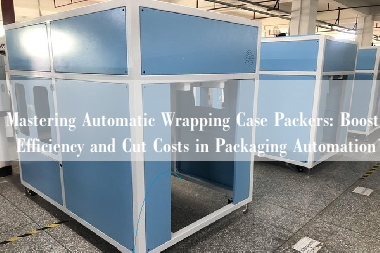
Key Component Analysis: How Wrapping, Packing, and Automatic Control Systems Collaborate
The seamless operation of an automatic wrapping case packer hinges on three primary components: the wrapping unit, packing unit, and automatic control system. The wrapping unit employs elements like film dispensers and heat sealers to encase products securely—for example, applying shrink wrap to stabilize items before packing. Next, the packing unit features mechanisms such as robotic arms or pusher systems to transfer wrapped products into cases, ensuring precise alignment without damage. Central to this collaboration is the automatic control system, typically a PLC-based or PC-controlled interface, which orchestrates timing, speed, and error detection. Sensors feed data on product flow, while actuators adjust wrapping pressure and packing force dynamically. This integration minimizes bottlenecks; if a sensor detects a misaligned product, the control system halts wrapping to prevent jams, then resumes once corrected. Such synergy enhances efficiency, with components communicating via industrial networks for real-time monitoring. In practice, this setup handles diverse materials, from cartons to poly bags, adapting to varying production demands while maintaining operational harmony.
Food Industry Guardian: Practical Applications of Automatic Wrapping Case Packers
Automatic wrapping case packers serve as indispensable assets in food manufacturing, addressing critical needs for product integrity and operational efficiency. This section examines their real-world implementation across food sectors, demonstrating how Yanmao Intelligent Equipment (Suzhou) solutions transform packaging workflows.
Why the Food Industry Relies on Automatic Wrapping Case Packers: Freshness, Efficiency, and Safety
Food manufacturers face unique packaging challenges requiring precise environmental control. Automatic wrapping case packers maintain freshness through minimized product exposure during wrapping and sealing processes. These systems operate within controlled atmosphere environments, preventing contamination while preserving shelf life. Efficiency demands drive adoption—high-speed automation handles seasonal demand spikes without compromising accuracy. Safety protocols are inherently addressed through reduced human-product contact and CIP (Clean-in-Place) compatible designs. Sanitary stainless-steel constructions meet FDA and EU food safety standards, eliminating bacterial harborage points common in manual packaging.
Real-World Applications: Packaging Stories from Frozen Foods to Bakery Products
In frozen food operations, Yanmao wrapping case packers demonstrate remarkable adaptability. One frozen vegetable processor integrated these systems to handle -20°C environments. The machines successfully pack ice-glazed products into corrugated cases at 25 cycles/minute, maintaining temperature integrity through rapid transfer from blast freezers. Wrapping tension adjusts automatically to accommodate frost buildup on film surfaces.
Bakery applications reveal different strengths. A European bread manufacturer deployed Yanmao systems for delicate artisan loaves. Gentle handling mechanisms prevent crumb loss during wrapping, while optical sensors detect irregular shapes for customized packing patterns. The solution processes 3,000 units/hour with zero compression damage—critical for preserving proofed dough structures. Both scenarios highlight the machines’ material flexibility, seamlessly transitioning between wax-coated cartons for frozen goods and recyclable paperboard for bakery items.
Advantages Showcase: Cost Savings, Output Boosts, and Waste Reduction
Operational economics favor automatic wrapping case packers in food environments. Labor cost reductions average 60% compared to manual lines, with one meat processor reallocating 15 staff to quality control roles. Throughput increases of 40-70% are documented, particularly in snack food facilities where 24/7 operation is essential. Waste minimization proves equally significant: precise film dosing cuts wrapping material usage by 22%, while automated rejection systems reduce product loss to under 0.5%. Energy efficiency emerges through heat-sealing optimization, lowering power consumption per cycle by 18% in dairy applications. These cumulative benefits deliver ROI within 14 months for most food installations.
Yanmao’s food-grade systems incorporate industry-specific enhancements. Antimicrobial conveyor belts prevent microbial growth, while quick-change tooling accommodates sudden product switches during seasonal runs. Remote monitoring capabilities allow technicians to adjust settings for humidity-sensitive items like chocolate without line stoppages. Such features position automatic wrapping case packers as strategic investments for food brands prioritizing quality and scalability.
The Art of Maintenance: Ensuring Long-Term Efficiency for Automatic Wrapping Case Packers
Proper maintenance transforms automatic wrapping case packers from high-performing assets into durable, cost-effective solutions. This section delivers actionable guidance for sustaining peak operation, minimizing downtime, and maximizing return on investment. Yanmao Intelligent Equipment (Suzhou) designs these systems with serviceability in mind, supporting manufacturers in achieving reliable, uninterrupted packaging lines.
Daily Maintenance Procedures: Cleaning, Lubrication, and Inspection
Daily upkeep prevents minor issues from escalating into costly failures. Cleaning protocols start with surface sanitization using non-abrasive, food-grade agents compatible with stainless steel components. Focus on areas prone to debris buildup, such as conveyor belts and wrapping heads. Remove film residues or product particles after each shift to avoid contamination risks. Lubrication follows manufacturer specifications—apply high-temperature grease to designated points like bearings and guide rails every eight operating hours. Visual inspections occur during routine checks: examine wear parts like seals and belts for signs of degradation, and verify alignment of sensors and actuators. Document findings in maintenance logs to track performance trends. Yanmao systems incorporate accessible panels for swift access, enabling operators to complete these tasks in under 15 minutes.
Troubleshooting Common Issues: Identification and Resolution Techniques
Rapid problem-solving maintains line efficiency. Frequent malfunctions include wrapping film jams, often signaled by tension errors or irregular sealing. Inspect film paths for obstructions and reset tension controls. Seal failures indicate temperature deviations; recalibrate heat bars using integrated diagnostic tools. Sensor misalignments cause packing errors; clean optical lenses and verify positioning. Mechanical issues like conveyor slippage stem from worn belts; tighten or replace components during scheduled pauses. Yanmao machines feature user-friendly interfaces displaying error codes—cross-reference these with manuals for instant resolution steps. For persistent problems, implement temporary bypass modes to continue operations while diagnosing root causes. Training operators to recognize early warning signs, such as unusual vibrations or delayed cycles, reduces resolution times by up to 70%.
Expert Maintenance Strategies: Extending Lifespan and Enhancing Performance
Professional approaches elevate system longevity and output. Schedule quarterly preventive maintenance with certified technicians to inspect critical elements like motors and control systems. Replace wear parts proactively based on usage hours—Yanmao recommends swapping belts and seals every 6-12 months. Optimize performance through calibration routines: fine-tune wrapping tension and sealing parameters for specific products, leveraging remote monitoring software for real-time adjustments. Implement a spare parts inventory for high-failure components, ensuring replacements are genuine to maintain warranty coverage. Extend lifespan by 30-50% with annual system audits, addressing environmental factors like humidity control in food facilities. Yanmao offers tailored service plans, including on-site support and operator training, to embed these strategies into daily workflows.
The Future Journey: Challenges and Innovations in Automatic Wrapping Case Packers
Automatic wrapping case packers stand at an inflection point where emerging technologies meet evolving industrial demands. Yanmao Intelligent Equipment (Suzhou) engineers systems anticipating tomorrow’s packaging landscape. This section examines technological frontiers, persistent challenges, and pathways toward sustainable automation.
Technological Frontiers: Intelligence and Sustainability Converge
Advanced sensor networks and machine learning algorithms drive the next evolution. Yanmao integrates IoT-enabled controllers that predict maintenance needs by analyzing motor vibrations and seal temperatures. Real-time data streams adjust wrapping tension based on product dimensions, reducing film waste by 8-12%. Cloud-based dashboards offer remote performance monitoring across global facilities. Sustainable design advances include energy-recovery systems converting braking energy into auxiliary power. Modular frames accept recycled-content films without retrofitting. Pilot projects feature AI-driven vision systems that detect packaging defects while optimizing material usage patterns. These innovations converge toward self-optimizing lines requiring minimal human intervention.
Industry Challenges: Navigating Cost, Flexibility, and Environmental Pressures
Three critical hurdles impede widespread adoption. High initial investment deters SMEs; Yanmao counteracts this with scalable configurations allowing phased implementation. Flexible production demands strain rigid automation; solutions involve quick-change tooling and universal grippers handling cartons from 200mm to 600mm. Environmental regulations tighten globally; Yanmao systems achieve compliance through reduced energy consumption (≤3.5 kWh/1000 cycles) and compatibility with biodegradable films. Material science limitations persist—current biofilms often compromise barrier properties. Yanmao’s R&D partnerships focus on developing high-strength compostable alternatives without sacrificing shelf-life protection.
Embracing Transformation: The Horizon of Packaging Automation
Tomorrow’s packaging lines will blur physical and digital boundaries. Yanmao prototypes demonstrate blockchain integration for real-time traceability from wrapping to palletizing. Hybrid human-robot workcells are under development, where collaborative robots assist in changeovers while operators oversee quality control. The ultimate goal remains holistic sustainability: zero-waste facilities powered by closed-loop material systems. Yanmao’s ISO-certified engineering team continuously refines technologies that balance throughput with planetary responsibility. Forward-thinking manufacturers adopt these innovations not merely for efficiency, but as strategic differentiators in increasingly eco-conscious markets. The evolution continues—each breakthrough bringing us closer to truly intelligent, self-sustaining packaging ecosystems.