
What is a Plastic Bottle Automatic Case Packer and Its Core Functions
A Plastic Bottle Automatic Case Packer represents a specialized industrial automation system designed to streamline the packaging of plastic bottles into cartons or cases. This equipment automates the process of transferring bottles from production lines into organized containers, eliminating manual labor and enhancing operational efficiency. Core functions include the automated handling, alignment, and insertion of plastic bottles into cases. These systems ensure bottles are securely placed without damage, reducing human error and maintaining product integrity. Key operations involve bottle feeding, precise positioning, case loading, and often integration with downstream sealing units. Plastic Bottle Automatic Case Packers support various bottle types, such as PET, HDPE, or glass-coated plastics, accommodating sizes from small vials to large beverage containers. The primary benefits encompass increased throughput, reduced labor costs, and improved safety by minimizing direct human intervention in repetitive tasks. Industries leverage this technology to achieve consistent, high-volume packaging outputs while adhering to stringent quality standards.
Working Principles and Key Components Analysis
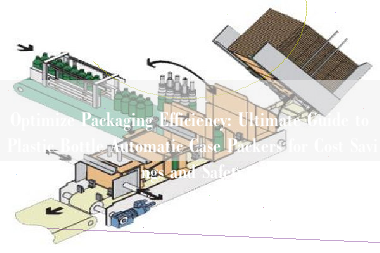
Plastic Bottle Automatic Case Packers operate through a sequence of coordinated mechanical actions driven by programmable logic controllers. The process begins with bottles conveyed via an infeed system onto a staging area. Robotic arms or servo-driven mechanisms then grip and transfer bottles into pre-erected cases. Key components include a bottle infeed conveyor for steady supply, a robotic manipulator with adaptive grippers for handling diverse bottle shapes, and a case handling unit that positions cartons for loading. Sensors detect bottle orientation and case alignment, ensuring precise placement. A central PLC orchestrates timing and movements, interfacing with sensors and actuators for real-time adjustments. Additional elements may involve vision systems for quality inspection and integration modules for seamless handoff to case sealers. This modular design allows customization for specific production needs, such as handling fragile or irregularly shaped bottles. The efficiency of these systems stems from high-speed operations, typically achieving rates of 20-100 cases per minute, depending on bottle size and configuration. Reliability is enhanced through robust construction, using materials like stainless steel for durability in hygienic environments.
Application Scenarios and Industry Advantages
Plastic Bottle Automatic Case Packers find extensive application across industries requiring high-volume bottle packaging, including beverages, pharmaceuticals, and personal care. In beverage production, these systems handle water or soda bottles, ensuring rapid filling of cartons for distribution. Pharmaceutical manufacturers utilize them for packaging medicine bottles, where precision and sterility are critical to meet regulatory standards like FDA or EU GMP. Personal care sectors deploy the equipment for items such as shampoo or lotion bottles, optimizing workflows in large-scale facilities. Industry advantages include significant labor cost reductions by automating tasks traditionally requiring multiple workers. Throughput improvements enable manufacturers to scale production without expanding physical footprints. Consistency in packaging reduces waste and enhances product presentation, boosting brand reputation. Safety benefits arise from minimizing worker exposure to repetitive motions and potential hazards. Environmental efficiency is achieved through optimized material usage and energy consumption. These systems support flexible operations, adapting to seasonal demand fluctuations or new product launches with minimal reconfiguration. Overall, Plastic Bottle Automatic Case Packers deliver a competitive edge by accelerating time-to-market and ensuring reliable, high-quality output.
Evaluating Your Requirements: Bottle Type, Production Volume, and Budget
Accurate requirement assessment forms the foundation for choosing an effective Plastic Bottle Automatic Case Packer. Bottle specifications demand careful examination. Consider variations in height, diameter, weight, and material composition (PET, HDPE, coated glass). Irregular shapes, such as oval cosmetic containers or fluted beverage bottles, impact gripper selection and handling mechanisms. Production volume requirements directly influence machine specifications. Calculate your current and projected case-per-minute (CPM) throughput needs. Low-to-mid volume operations (under 20 CPM) may prioritize simpler systems, while high-volume lines (exceeding 50 CPM) necessitate advanced robotic palletizers or integrated systems. Budget considerations extend beyond the initial purchase price. Factor in installation costs, potential facility modifications, long-term energy consumption, and projected maintenance expenses. A higher initial investment in a robust, adaptable Case Packer often delivers superior lifetime value through reduced downtime and extended operational life.
Essential Selection Criteria: Speed, Compatibility, and Automation Level
Three critical factors dominate Plastic Bottle Automatic Case Packer selection: operational speed, material compatibility, and automation integration. Machine speed must align with upstream production and downstream processes. Bottle infeed rates, case erector capacity, and sealer synchronization create system bottlenecks if mismatched. Verify the Case Packer’s maximum rated speed under actual production conditions, not just ideal scenarios. Material compatibility encompasses both bottle handling and case specifications. Ensure grippers accommodate diverse bottle necks, body contours, and weights without slippage or damage. Verify case size adaptability – the system should seamlessly transition between various carton dimensions with minimal changeover time. Automation level determines labor reduction potential. Basic semi-automatic systems require manual case placement, while fully automated Case Packers integrate with upstream conveyors and downstream robotic palletizers. Evaluate Programmable Logic Controller (PLC) sophistication, human-machine interface (HMI) usability, and sensor technology (vision systems for orientation checks, weight verification sensors). High automation levels minimize human intervention, enhancing consistency and hygiene – crucial for food and pharmaceutical applications.
Comparing Brands and Models: Cost-Benefit Analysis
Performing a rigorous cost-benefit analysis when comparing Plastic Bottle Automatic Case Packer brands reveals true value. Direct costs include equipment purchase, shipping, installation, and commissioning. Indirect costs involve operator training, spare parts inventory, and estimated annual maintenance. Assess durability through component quality – stainless steel construction offers longevity in washdown environments compared to powder-coated alternatives. Evaluate reliability metrics like meantime between failures (MTBF) and manufacturer-reported uptime percentages. YANMAO Intelligent Equipment (Suzhou) systems frequently demonstrate advantages in these areas, employing ISO-certified engineering processes. Operational efficiency directly impacts ROI. Calculate potential labor savings: A single automated Case Packer typically replaces 3-5 manual workers per shift. Estimate throughput increases; modern systems achieve 15-30% higher output than manual packing through continuous operation. Consider scalability – modular designs allow future upgrades like adding robotic arms or vision inspection. Warranty terms and global service support availability significantly reduce long-term risk. YANMAO provides comprehensive technical support and readily available spare parts networks in North America and Europe, minimizing production disruptions. Energy efficiency ratings contribute to lower operating expenses over the equipment’s lifespan.
Daily Maintenance Tasks and Checklist
Consistent daily maintenance preserves Plastic Bottle Automatic Case Packer performance and prevents unexpected downtime. Begin each shift with visual inspections of all moving components. Examine gripper mechanisms for wear or misalignment, particularly when handling irregular bottle shapes. Verify pneumatic system pressure levels within manufacturer specifications and inspect air lines for leaks. Clean optical sensors and vision systems using approved non-abrasive materials to maintain detection accuracy. Lubricate guide rails and bearings according to Yanmao’s lubrication schedule using specified greases. Remove packaging debris from conveyor belts, accumulation tables, and case indexing areas after each production run. Confirm emergency stop buttons and safety interlocks function properly through operational tests. Maintain a digital or physical log documenting these checks, noting any deviations from normal operation.
Daily Maintenance Checklist:
– Gripper jaw inspection for cracks/deformation
– Pneumatic pressure verification (psi/kPa)
– Sensor lens cleaning (vision systems, photoelectric eyes)
– Conveyor belt debris removal
– Lubrication point assessment (rails, bearings, chains)
– Safety system functionality test
– Reject mechanism operation check
– HMI error log review
Common Troubleshooting and Solutions
Rapid diagnosis of Plastic Bottle Automatic Case Packer malfunctions minimizes production interruptions. Bottle jams frequently occur at infeed starwheels or accumulation tables – inspect for bent guide rails, incorrect timing settings, or foreign objects obstructing pathways. Case misalignment during loading typically indicates vacuum cup deterioration or suction pressure inconsistencies; replace worn cups and recalibrate vacuum generators. When cases fail to seal properly, examine tape head mechanisms for adhesive buildup and verify tape roll tension settings. Erratic robotic arm movements often stem from encoder calibration drift or servo motor overheating; allow cooling periods and perform positional recalibration. Persistent PLC communication errors require inspection of Ethernet connections and power cycle procedures. Maintain an accessible troubleshooting flowchart near the operator station for quick reference during critical failures.
Frequent Issues and Resolutions:
| Symptom | Probable Cause | Corrective Action |
|———|—————-|——————-|
| Bottle misfeed | Guide rail misalignment | Realign rails per tolerance specs |
| Partial case loads | Vacuum cup failure | Replace cups, test suction pressure |
| Case sealing failure | Tape head contamination | Clean adhesive residue, adjust tension |
| Positional inaccuracy | Encoder calibration drift | Perform full axis recalibration |
| System communication loss | Network switch failure | Replace switch, verify IP settings |
Long-term Maintenance Strategies and Safety Operation Tips
Proactive maintenance planning extends Plastic Bottle Automatic Case Packer service life beyond typical operational expectations. Schedule quarterly comprehensive inspections including gearbox oil analysis, motor brush replacement, and structural bolt torque verification. Biannually replace high-wear components like timing belts, gripper fingers, and vacuum generators regardless of visible deterioration. Annually recalibrate all sensors and robotic positioning systems using certified measurement tools. Implement vibration analysis during production to detect early bearing failures or mechanical imbalances. Maintain detailed maintenance records tracking component replacement dates and performance metrics for predictive analytics.
Safety protocols demand strict adherence during all maintenance activities. Always implement lockout/tagout (LOTO) procedures before accessing internal components. Wear cut-resistant gloves when handling sharp case-sealing blades or metal edges. Ensure adequate lighting in maintenance areas and use non-conductive tools when working near electrical panels. Train technicians on proper lifting techniques for heavy subassemblies and provide mechanical aids for components exceeding 50 lbs. Conduct monthly safety audits verifying guard placement integrity and emergency stop functionality. Yanmao Intelligent Equipment (Suzhou) recommends factory-certified training programs for maintenance personnel to ensure compliance with international safety standards ISO 13849 and ANSI/RIA R15.06.