
Small Case Packers and Case Erectors: Fundamental Introduction
1.1 Definition, Types, and Core Functions
Small case packers and case erectors represent essential automation tools in modern packaging operations. A case erector transforms flat cardboard blanks into ready-to-use boxes, preparing them for product insertion. This machine handles various box sizes and styles, including standard slotted cartons. A case packer automates the process of placing products into these erected boxes, ensuring precise alignment and efficient loading. Both machines operate as standalone units or integrated components in larger packaging systems.
Yanmao Intelligent Equipment (Suzhou) designs small-scale versions tailored for compact spaces and lower-volume needs. Key types include semi-automatic models for flexible, manual-assisted operations and fully automatic variants for high-speed, continuous workflows. Core functions focus on reliability: case erectors feature automated flap opening and base sealing, while case packers incorporate sensors for accurate product positioning and gentle handling. These machines support diverse carton materials, from lightweight corrugated cardboard to reinforced options, adapting to specific industry demands.
1.2 Application Scenarios in E-commerce Logistics
In e-commerce logistics, small case packers and case erectors address the need for rapid, scalable packaging to handle fluctuating order volumes. E-commerce fulfillment centers rely on these machines for processing small parcels, such as individual consumer goods, electronics, or apparel. Case erectors swiftly prepare boxes for outbound shipments, reducing bottlenecks during peak seasons like holidays or sales events. Case packers then automate the insertion of items, ensuring consistent packing quality and minimizing human error.
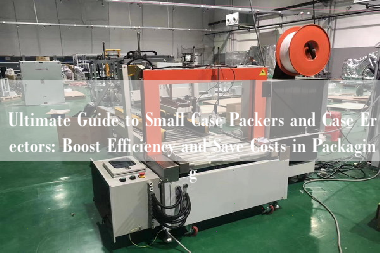
Yanmao solutions excel in high-turnover environments, such as online retail warehouses, where speed and accuracy drive customer satisfaction. Applications include same-day shipping operations, subscription box services, and returns processing. Integration with conveyor systems allows seamless movement from packing to labeling stages, optimizing end-to-end workflows. This automation enables e-commerce businesses to scale efficiently, supporting growth without proportional labor increases.
1.3 Advantages and Common Challenges
Implementing small case packers and case erectors offers significant advantages for manufacturers and logistics providers. Labor cost reduction stands out, as automation replaces manual box assembly and packing tasks. Throughput increases dramatically, with machines processing hundreds of boxes per hour, enhancing overall line efficiency. Quality improvements result from standardized processes, reducing damage rates and ensuring uniform packaging. Yanmao machines contribute to sustainability by minimizing material waste through precise box sizing and reusable designs.
Common challenges involve initial investment considerations, as capital costs for automation equipment may require careful budgeting. Space constraints can arise in smaller facilities, necessitating compact machine footprints. Maintenance demands include regular inspections for wear parts, such as seals or sensors, to prevent downtime. Yanmao addresses these through robust engineering, offering modular designs for easy upgrades and remote support services to troubleshoot issues swiftly. Training operators on safe, efficient use mitigates operational hurdles, ensuring long-term reliability and return on investment.
Small Case Packers and Case Erectors: Operating Guide
2.1 Preparation and Machine Setup
Proper setup ensures efficient operation of small case packers and case erectors. Begin with environmental checks: confirm the work area has adequate space for material flow, stable flooring, and sufficient ventilation. Verify electrical connections match machine specifications—typically 110V or 220V for North American operations. Inspect cardboard blanks for defects like moisture damage or warping before loading them into the erector’s magazine. For case packers, calibrate product guides to match item dimensions, preventing misalignment during insertion.
Configure machine parameters using the touchscreen interface. Input box dimensions (length, width, height) and select sealing settings—options often include hot-melt glue or tape. Adjust conveyor speed to synchronize with upstream/downstream equipment. Test pneumatic systems for consistent air pressure, critical for suction-based box handling. Perform a dry run without products to validate sensor functionality, such as infrared detectors for box presence. Load consumables: adhesive cartridges for sealers, lubricants for moving parts. Yanmao systems feature pre-set templates for common e-commerce box sizes, accelerating changeovers.
2.2 Detailed Operating Steps
Power on the machine using the main control panel. Initiate the case erector first: the automated arm retrieves a flat blank, unfolds it into a box shape, and secures the bottom flaps. Sensors confirm successful erection before transferring the box to the packing station. For the case packer, activate the infeed conveyor. Products enter via guided lanes, where optical sensors trigger robotic arms or pushers to load items into boxes. Monitor fill accuracy; most systems allow real-time adjustments via the HMI if products shift.
Sealing follows automatically: top flaps fold and secure with adhesive or tape. Integrated systems handle this in-sequence, while standalone sealers require manual transfer. During operation, observe throughput metrics on the dashboard. Address minor jams immediately using the pause function—clear obstructions without stopping the entire line. For shutdown, complete the current cycle, clear all boxes from conveyors, and power off using the sequence: stop conveyor > deactivate sensors > cut main power. Yanmao’s user logs track performance data, aiding efficiency audits.
2.3 Safety Precautions and Routine Maintenance
Safety protocols prevent accidents. Operators must wear cut-resistant gloves and safety glasses near moving parts. Engage lockout/tagout procedures before maintenance—isolate energy sources using physical locks. Emergency stop buttons require monthly functionality tests. Never bypass light curtains or guards; these interrupt operation if hands enter hazardous zones. Store flammable adhesives in designated fireproof cabinets away from heat sources.
Routine maintenance extends machine life. Daily tasks: clean adhesive nozzles to prevent clogging, wipe sensors with alcohol wipes, and inspect chains for tension. Weekly tasks: lubricate bearings and rails, check pneumatic hoses for leaks, replace worn suction cups. Monthly tasks: calibrate sensors using test objects, examine electrical wiring for fraying, and validate seal integrity with sample boxes. Yanmao’s diagnostic software flags anomalies like motor overheating or misaligned arms. Keep logs of part replacements; typical wear items include belts and seals, with lifespans noted in manuals.
Choosing the Best Small Case Erector
3.1 Critical Selection Criteria
Throughput requirements dictate case erector selection. Calculate peak production volumes in boxes per hour, accounting for seasonal spikes in e-commerce operations. Machines handling 15-30 boxes per minute suit most small-scale facilities. Evaluate box size compatibility: compact models typically accommodate dimensions from 6″x4″x4″ to 24″x18″x16″. Verify material handling capabilities—corrugated cardboard weight between 200-500 GSM performs optimally in automated systems.
Footprint constraints influence equipment choices. Measure available floor space, remembering to include clearance zones for maintenance access. Modular designs requiring under 20 sq. ft. integrate well in crowded warehouses. Assess changeover frequency: machines with digital preset libraries reduce transition time between box formats from hours to minutes. Energy consumption data provides long-term cost insights—seek models with servo motors reducing power usage by 30% versus traditional drives. Yanmao’s compact erectors feature tool-free adjustments for flap folders and suction heads, eliminating wrench time during size transitions.
3.2 Equipment Recommendations and Brand Analysis
Yanmao’s CX-Series compact case erectors demonstrate industry-leading flexibility. The CX-200 model processes 25 boxes/minute across 12 size configurations with automatic glue dispensing. Competitive analysis shows Brand A’s SwiftErect focuses on speed (30 boxes/minute) but requires manual adhesive reloads. Brand B’s MiniLoader offers lower upfront cost yet has limited cardboard weight tolerance.
Durability metrics separate premium equipment. Yanmao units incorporate hardened steel folding arms rated for 100,000+ cycles before service. Compare warranty terms: industry standard remains 1 year, while Yanmao extends coverage to 18 months on critical components. Integration readiness proves vital—Yanmao systems feature standardized MQTT protocol interfaces, enabling plug-and-play connectivity with warehouse management software. Budget-conscious operations benefit from Yanmao’s lease-to-own programs, spreading acquisition costs over 36 months.
3.3 E-commerce Logistics Optimization
E-commerce fulfillment centers demand specialized configurations. Implement dual magazine systems allowing simultaneous loading of two box sizes—critical during promotional surges with varied product dimensions. Pair case erectors with weight verification scales, automatically flagging underfilled shipments before sealing. Yanmao’s SmartErect software generates real-time analytics: box usage patterns, jam frequency reports, and predictive maintenance alerts.
Retrofit existing lines with sensor-driven synchronization. Photoeyes coordinate erector activation only when downstream packers have capacity, eliminating box pileups. For returns processing, select models with reverse operation modes capable of disassembling boxes for recycling. Night operations gain efficiency through Yanmao’s remote monitoring package, enabling technicians to diagnose issues via encrypted video feeds. Seasonal facilities maximize ROI with quick-disconnect power modules, allowing equipment relocation between warehouses in under two hours.