
Meeting Automation: Entering the World of Automatic Case Packing and Bag Inserting
Defining the Technology: Core Functions Unveiled
Automatic case packing and bag inserting systems represent specialized industrial automation solutions for primary packaging operations. These integrated machines perform two critical functions: precise product loading into containers using Case Packer technology, and simultaneous insertion of protective inner liners through Bag Inserting Machines. The core operational sequence involves three synchronized stages – container positioning, automated bag deployment within the container cavity, and accurate product placement into the bag-lined receptacle. Yanmao Intelligent Equipment (Suzhou) designs these systems to handle diverse packaging formats including corrugated cartons, woven poly bags, and plastic pouches with micron-level precision. Key technological capabilities include variable-size container adaptation, high-speed servo-controlled motion systems, and vision-guided bag placement mechanisms ensuring zero-fold errors during insertion cycles.
Critical Applications Across Industrial Sectors
Packaging operations requiring moisture barriers, contamination protection, or specialized containment increasingly depend on automated bag insertion technology. In food processing facilities, these systems secure dry goods like flour and sugar within poly bag-lined cartons, maintaining USDA-compliant hygiene while preventing product exposure. Pharmaceutical manufacturers utilize automated bag insertion for blister-packed medications, creating sterile secondary packaging environments that exceed cGMP cleanroom standards. Industrial sectors handling powders and granules – from agricultural chemicals to polymer compounds – deploy these solutions for drum packaging operations, where liner insertion systems prevent material interaction with 55-gal steel containers. The technology eliminates manual handling risks in toxic material packaging while achieving throughput rates exceeding 40 containers per minute in high-volume production environments. Labor-intensive industries with repetitive packaging tasks report 70% reduction in ergonomic injuries after implementing automated bag insertion systems.
Yanmao’s modular designs accommodate rapid format changeovers between carton, poly bag, and drum applications – a critical advantage for contract packaging facilities managing multiple product lines. The integration of robotic end-effectors allows single systems to handle everything from fragile cosmetic jars to heavy industrial parts, with force-sensitive gripping ensuring damage-free transfers into bag-lined containers. North American automotive component suppliers have documented 34% throughput increases after replacing manual bagging stations with Yanmao’s automated solutions, particularly in packaging operations for greased or oil-coated parts requiring protective inner sleeves.
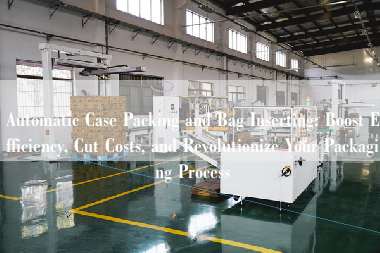
Bag & Drum Handling Expertise
Operational Mechanics: Precision Bag and Liner Insertion
Bag Inserting Machines deploy protective inner layers through a sequenced vacuum-gripping process. Poly bag or plastic pouch material unrolls from servo-controlled spindles, with optical sensors detecting precise positioning coordinates. Pneumatic suction cups secure bag edges while forming arms create optimal cavity geometry within target containers – whether corrugated cartons or 55-gal drums. For drum applications, Liner Insertion Systems utilize mandrel-assisted unfolding technology that prevents creasing during placement. The critical insertion phase occurs within 0.5-second cycles, with laser alignment ensuring perfect centering before product loading commences. Yanmao’s proprietary friction-reduction rollers enable smooth deployment of woven poly bags exceeding 80-lb capacity, while anti-static systems prevent cling in low-humidity environments.
Robotic packaging integrations elevate precision through six-axis articulation. Vision-guided robots synchronize with Case Packers to position products inside bag-lined containers, with force-torque sensors maintaining consistent 2.3N insertion pressure. This mechatronic coordination achieves 99.8% bag-placement accuracy across variable container dimensions, adapting instantly to carton size changes through cloud-stored preset libraries. Drum handling configurations incorporate rotary indexing tables that position containers beneath automated filling heads, completing liner-to-fill transitions in under 7 seconds without human intervention.
Investment Analysis: Calculating Automation Returns
Three primary cost factors determine packaging automation ROI: labor displacement, throughput enhancement, and material waste reduction. Single Bag Inserting Machine installations typically replace 3-5 manual operators, yielding $162,000 annual labor savings at average North American manufacturing wages. High-speed models processing 60+ containers per minute demonstrate 18-month payback periods in facilities with dual-shift operations. Operational expense reductions include 40-60% less polymer film usage through precision cutting systems and 90% reduction in damaged goods from elimination of manual handling errors.
Selection criteria prioritize application-specific variables. Food processors should evaluate USDA-grade stainless steel construction and CIP compatibility, while chemical manufacturers require explosion-proof ratings for volatile material containment. Throughput calculations must account for product characteristics – free-flowing granules enable 20% faster cycling than irregularly shaped items requiring orientation. Yanmao’s modular scalability proves critical; facilities handling both cartons and drums can integrate liner insertion systems with robotic palletizers through standardized interfaces, avoiding 35% higher costs of separate equipment procurement. Energy consumption profiles reveal 15-30% variance between servo-driven and pneumatic models, making motor efficiency data essential for total cost projections.
Validation protocols should include trial runs with actual packaging materials. Reputable suppliers provide material testing labs to verify performance with client-specific poly bags, especially when handling metallized barrier films or anti-static woven variants. Warranties covering 100,000 operational hours demonstrate confidence in mechanical endurance, while remote diagnostic capabilities reduce downtime by 65% compared to conventional support models.