
Definition and Core Functionality
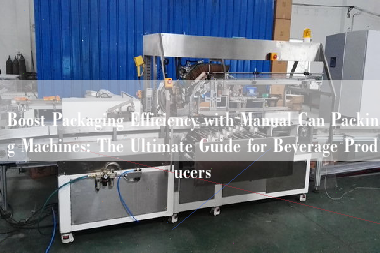
Manual case packers represent semi-automated packaging equipment bridging the gap between fully manual operations and high-speed automation. These systems require an operator to manually place beverage cans into a pre-formed case positioned on the machine. The core functionality centers on automating the final case handling steps: once cans are loaded, the machine precisely closes the case flaps and applies consistent sealing pressure using tape or adhesive. This mechanization specifically targets the labor-intensive, repetitive tasks of case closure and sealing. The primary objective is enhancing packing line efficiency, ensuring uniform case presentation, and reducing operator strain associated with manual folding and taping.
Operational Principles and Structural Components
The operational sequence of a manual case packer involves distinct stages. An operator manually loads beverage cans into an open case positioned within the machine’s work area. The machine then initiates the packing cycle. Key structural elements enable this process:
Case Holder/Positioning Guides: Securely holds the corrugated case in the correct orientation during loading and sealing.
Flap Folding Mechanism: Automated arms or plates precisely fold the top flaps of the case inward sequentially.
Sealing System: Applies pressure-sensitive tape or hot-melt adhesive to seal the folded flaps. Systems may feature tape dispensers, tape heads, or glue applicators.
Compression System (Optional): Some models include a platen or press that gently compresses the loaded case contents before sealing to ensure stability and prevent bulging.
Control Panel: Simple interface (buttons, touchscreen) for the operator to initiate cycles and perform basic functions.
Discharge Conveyor: Moves the sealed case away from the work area for palletizing or further handling.
Following operator loading, the machine executes the flap folding and sealing process automatically, ensuring consistent quality and reducing reliance on operator skill for these final steps. The sealed case is then conveyed out.
Application Scenarios and Industry Advantages
Manual case packers deliver significant value in specific production environments:
Small to Medium-Sized Beverage Producers: Ideal for facilities with moderate can packaging volumes where full automation investment is not yet justified.
Craft Breweries and Bottlers: Supports smaller batch runs and diverse packaging formats common in craft beverage segments.
Secondary Packaging Lines: Effective for end-of-line packing after manual filling or primary packaging processes.
New Product Lines: Provides a flexible solution for launching new products before committing to high-volume automation.
* Budget-Conscious Operations: Offers a substantial efficiency gain over fully manual packing at a lower entry cost than robotic or fully automated case packers.
Key industry advantages include:
Labor Cost Reduction: Automates the most repetitive and physically demanding aspects of case packing (folding, sealing).
Increased Throughput: Enables operators to focus solely on loading cans, significantly speeding up the overall packing process.
Improved Seal Consistency & Quality: Eliminates human error in flap folding and tape application, ensuring reliable case closures that protect contents during transit.
Enhanced Worker Safety: Reduces risks of repetitive strain injuries (RSI) associated with manual case folding and taping.
Space Efficiency: Manual packers require minimal floor space compared to larger automated systems.
Scalability: Serves as a practical stepping stone towards higher levels of automation as production volumes grow.
Yanmao Intelligent Equipment (Suzhou) understands these diverse needs, offering manual case packing solutions that provide immediate operational improvements while laying groundwork for future automation integration.
Operating Guide: Safety and Efficient Usage for Manual Case Packers
Safety Precautions and Preparation
Operators must wear cut-resistant gloves and safety footwear when handling cases. Verify all safety interlocks function properly before operation. Maintain clear access to emergency stop buttons. Ensure adequate lighting in the packing area. Confirm the machine is properly grounded and pneumatic lines are secured. Check that case positioning guides match carton dimensions. Verify tape or adhesive systems are loaded with correct sealing materials. Inspect compression mechanisms for smooth movement. Clear all debris from the work area and discharge conveyor. Review equipment manuals before initial operation. Conduct lockout/tagout procedures during maintenance activities. Never bypass safety guards while the machine is operational.
Detailed Operational Sequence
Machine Initialization
Power on the control system at the main panel. Set case dimensions using adjustable guides. Load tape rolls into the dispensing system or fill adhesive reservoirs. Perform a test cycle without product to verify mechanism alignment.
Packing Procedure
Position an open corrugated case within the holder, ensuring bottom flaps are properly seated. Manually place beverage cans into the case according to the defined pattern. Confirm can columns are properly aligned. Press the cycle initiation button on the control panel. Observe automatic flap folding sequence completion. Monitor tape application across center and end seams. Retrieve the sealed case from the discharge conveyor immediately after completion.
Shutdown Protocol
Clear all cases from the work area. Power down the control system. Remove unused tape rolls or purge adhesive lines. Wipe down contact surfaces with approved cleaning agents. Document any operational anomalies in the maintenance log.
Common Operational Challenges and Solutions
Inconsistent Case Sealing
Causes: Worn tape head components, incorrect adhesive temperature, misaligned case guides.
Resolution: Replace tape head blades monthly, verify adhesive melt temperature settings, recalibrate case guides weekly.Flap Folding Errors
Causes: Damaged case flaps, incorrect case sizing, mechanical obstruction.
Resolution: Inspect case quality pre-use, reconfigure adjustable guides, clear debris from folding arms.Product Misalignment
Causes: Operator loading inconsistency, vibration during cycle initiation.
Resolution: Implement loading templates for operators, install anti-vibration pads under machine feet.Cycle Interruptions
Causes: Power fluctuations, pneumatic pressure drops, safety sensor obstruction.
Resolution: Install voltage regulators, check air compressor settings monthly, clean photoelectric sensors daily.Conveyor Jamming
Causes: Overweight cases, misaligned discharge rollers, accumulated debris.
Resolution: Verify maximum case weight compliance, adjust roller alignment quarterly, establish hourly cleaning intervals.
Operators should immediately halt operations when detecting unusual noises, smoke, or fluid leaks. Yanmao Intelligent Equipment provides 24/7 technical support for unresolved operational issues through their global service network.
Selecting the Optimal Supplier for Manual Can Packing Machines
Evaluation Criteria for Suppliers
Machine durability defines long-term value. Assess frame construction using 12-gauge steel or thicker. Verify component certifications for food-grade applications. Production capacity alignment matters; confirm lead times under 8 weeks for standard models. Analyze total ownership costs beyond initial price quotes. Include energy consumption metrics and spare part availability. Service response times under 12 hours for critical issues demonstrate reliability. Demand documented mean time between failures (MTBF) exceeding 10,000 operational hours. Request factory audit reports validating ISO 9001 compliance.
Leading Supplier Comparison
Yanmao Intelligent Equipment (Suzhou)
– Quality: Patented anti-jamming guides for consistent can alignment
– Price: 15-20% below European equivalents with equivalent specs
– Service: On-site technicians available across 18 countries
– Unique Feature: Modular design allowing future automation upgrades
Supplier A (Regional)
– Quality: Basic carbon steel frames requiring frequent reinforcement
– Price: 12% lower entry cost but 30% higher maintenance fees
– Service: Limited to email support with 72-hour response guarantee
Supplier B (Global)
– Quality: FDA-compliant stainless contact surfaces
– Price: Premium pricing with 5-year warranty inclusion
– Service: Dedicated account managers but limited repair centers
Supplier C (Specialized)
– Quality: Customizable pressure-sensitive can grippers
– Price: Highest initial investment with proprietary components
– Service: Annual maintenance contracts mandatory
Procurement Process and Contract Considerations
Initiate with technical specification sharing including can dimensions, throughput requirements, and facility layouts. Require factory acceptance testing (FAT) before shipment. Payment terms should follow 30/70 structure—30% deposit, 70% after successful commissioning. Include penalty clauses for delayed deliveries exceeding contractual dates. Demand spare parts lists with guaranteed 10-year availability. Intellectual property protections prevent design replication. Finalize service level agreements (SLAs) specifying:
– 4-hour remote diagnostics response
– 48-hour critical part dispatch
– Biannual preventive maintenance visits
– Operator training programs included
Verify force majeure coverage for supply chain disruptions. Yanmao provides turnkey procurement support from specification review to installation supervision.
Maintenance Optimization and Future Trends for Manual Can Packing Machines
Daily Maintenance Protocols and Preservation Schedules
Implement lubrication cycles every 80 operational hours using NSF H1-approved grease on guide rails and pivot joints. Conduct daily visual inspections for:
– Structural integrity of can alignment guides
– Wear patterns on compression plates
– Tension consistency in manual lever mechanisms
Establish a tri-phase preservation schedule:
1. Weekly: Calibration verification using laser alignment tools (±0.5mm tolerance)
2. Monthly: Full component torque testing and fastener replacement
3. Bi-annual: Frame stress analysis with ultrasonic thickness gauging
Maintain digital logs tracking maintenance events, component replacements, and throughput efficiency metrics. Yanmao’s cloud-based platform enables automated service reminders linked to machine runtime data.
Performance Enhancement Strategies and Retrofit Solutions
Increase throughput 18-22% through these optimization measures:
– Install quick-release can templates reducing changeover time from 15 minutes to 90 seconds
– Retrofit ergonomic handles with force-reduction technology (35% less operator effort)
– Implement weight-sensing platforms verifying can count accuracy
Modular upgrade paths include:
– Automation Hybrid Kits: Add pneumatic assist modules for lid placement
– Data Integration: Connect IoT sensors monitoring jam frequency and operator efficiency
– Material Upgrades: Replace carbon steel contact points with FDA-compliant stainless variants
Yanmao’s retrofit programs maintain original machine frameworks while adding functionality, typically achieving ROI within 14 months.
Emerging Industry Directions and Technological Evolution
Three transformative trends redefine manual packing:
1. Predictive Maintenance Ecosystems: Vibration sensors coupled with AI algorithms forecast bearing failures 300 operational hours pre-occurrence
2. Human-Machine Interface (HMI) Advancements: Augmented reality goggles guide operators through complex changeovers with real-time overlay instructions
3. Sustainable Engineering: Recyclable composite frames reducing machine weight 40% while maintaining structural rigidity
Innovation pipelines focus on:
– Voice-activated operation controls for hands-free adjustment
– Machine learning systems analyzing operator movements to suggest efficiency improvements
– Blockchain-secured maintenance records ensuring compliance auditing
Yanmao’s R&D division pioneers modular manual-automated transition systems, allowing incremental automation adoption without full line replacement. Global patents pending on magnetic levitation can transport systems eliminating friction wear.