
Understanding Case Packers and Palletizers: Fundamentals and Selection
Case Packers and Palletizers form the critical backbone of modern packaging automation. These systems handle the precise placement of products into containers and the organized stacking of those containers onto pallets for storage and shipment. Yanmao Intelligent Equipment (Suzhou) designs robust solutions integrating these technologies to streamline operations for manufacturers handling cartons, poly bags, and drums.
Defining Operation and Core Components
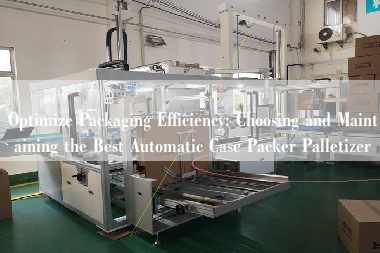
A Case Packer receives products – bottles, cans, pouches, or bags – and accurately loads them into pre-formed cases or cartons. Mechanisms vary, including robotic arms, plungers, or drop systems, chosen based on product fragility and speed requirements. The Palletizer, often a Robotic Palletizer, takes the sealed cases or drums and systematically stacks them onto pallets according to predefined, stable patterns. Core components across these systems include:
Material Handling Conveyors: Transport products, cases, and finished pallet loads.
Precision Robotics or Gantry Systems: Execute the picking, placing, and stacking motions.
Programmable Logic Controllers (PLCs): Serve as the central intelligence for sequencing and coordination.
End-of-Arm Tooling (EOAT): Custom grippers or heads designed for specific product or container handling.
* Safety Systems: Light curtains, safety scanners, and emergency stops ensuring operator protection.
Operational Advantages and Deployment Environments
Implementing Case Packers and Palletizers delivers significant operational improvements. Primary benefits center on substantial labor cost reduction and enhanced throughput. Automating the repetitive, physically demanding tasks of manual packing and stacking minimizes reliance on large labor crews, particularly for high-volume or multi-shift operations. This automation directly translates to faster cycle times and increased line output. Consistency and accuracy improve dramatically, reducing product damage from mishandling and ensuring pallet patterns meet transport safety standards. Common application scenarios include:
High-Speed Production Lines: Beverage, food processing, and consumer goods facilities demanding rapid packaging.
Heavy Load Operations: Handling drums, large bags, or dense product cases where manual handling poses injury risks.
Warehousing & Distribution Centers: Automating the palletization of mixed-SKU orders for efficient shipping.
Hygienic/Sterile Environments: Pharmaceutical, food, and chemical sectors requiring minimal human intervention.
Selecting the Optimal Palletizer: Key Considerations
Choosing the right Palletizer, often integrated with a Case Packer, demands careful analysis of specific operational parameters. Key factors guide this decision:
- Payload Capacity: The maximum weight the Robotic Palletizer must lift per cycle (e.g., single case, multiple cases, full drum).
- Cycle Time & Throughput: Required palletizing speed measured in cases or layers per minute to match upstream packing rates.
- Product/Container Variability: Flexibility needed to handle different case sizes, bag types, or drum dimensions. Robotic Palletizers typically offer higher adaptability.
- Footprint Constraints: Available floor space for the Palletizer system and associated conveyors.
- Pallet Pattern Complexity: Complexity of the stacking patterns required for stability during transport.
- Integration Requirements: Compatibility with existing upstream Case Packers, Case Sealers, and downstream warehouse management systems (WMS).
Yanmao systems typically achieve 70-90% labor reduction in packing/palletizing tasks while boosting throughput by 30-50% over manual lines. For warehouses targeting peak efficiency, a Robotic Palletizer integrated with a high-speed Case Packer provides unmatched flexibility and scalability. Evaluating load, speed, flexibility, and space constraints against operational goals is essential. Yanmao engineers provide detailed analysis to recommend the optimal configuration – contact our team for a tailored assessment based on your unique product flow and output targets.
Maintaining Peak Performance: Essential Care for Case Packers & Palletizers
Proactive maintenance and precise operation form the foundation for maximizing the longevity and efficiency of automated Case Packers and Palletizers. Yanmao Intelligent Equipment (Suzhou) designs systems for industrial durability, yet consistent care remains vital for sustained high throughput and minimized unplanned downtime. Implementing structured protocols ensures these critical packaging assets deliver continuous ROI through labor savings and production reliability.
Daily Maintenance Routines and Service Intervals
Regular inspection and servicing prevent minor issues from escalating into major failures. Follow these task-specific schedules:
Case Packer Daily Tasks:
– Verify alignment of product infeed guides and case magazines.
– Clean optical sensors detecting product presence and case formation.
– Inspect plungers, pushers, or robotic End-of-Arm Tooling (EOAT) for wear or residue buildup.
– Lubricate chain drives and linear bearings per manufacturer specifications.Palletizer Daily Tasks:
– Check gripper pads or vacuum cups on Robotic Palletizer EOAT for tears or suction loss.
– Confirm pallet positioning sensor calibration.
– Remove debris from layer table and pallet conveyor zones.
– Monitor hydraulic/pneumatic systems for leaks in drum-handling configurations.Weekly/Monthly Protocols:
– Tighten frame bolts and motor mounts.
– Replace air filters in pneumatic systems.
– Test emergency stop circuits and safety light curtains.
– Validate PLC program backups and update firmware.
Adhere to Yanmao’s recommended 250-hour minor service and 2,000-hour major overhaul intervals. Document all maintenance using digital logs for predictive analytics.
Resolving Common Operational Disruptions
Timely troubleshooting maintains packaging line continuity. Address these frequent scenarios:
Case Jams in Packers:
Cause: Misaligned case flaps, incorrect box sizing, or conveyor speed mismatch.
Solution: Clear obstruction; recalibrate case magazine settings; verify product dimensions match program parameters.Unstable Pallet Patterns:
Cause: Worn grippers, incorrect layer height sensing, or pallet surface warping.
Solution: Inspect/replace EOAT components; recalibrate height sensors; reject damaged pallets.Robotic Drift or Inaccuracy:
Cause: Loose mechanical couplings, encoder faults, or temperature fluctuations affecting calibration.
Solution: Perform robotic zero-position reset; check encoder connections; maintain ambient temperature within ±5°F.
Prevent recurrence through root-cause analysis. Install vibration monitors on motors and gearboxes to detect early bearing wear. Use Yanmao’s remote diagnostics portal for real-time system health checks.
Maximizing Equipment Service Life
Extend operational lifespan beyond standard warranties with disciplined practices:
- Operator Training: Certify staff on startup/shutdown sequences, proper jam clearing methods, and HMI navigation. Untrained interventions cause 40% of premature failures.
- Environmental Management: Maintain relative humidity below 60% to prevent corrosion. Use dust extraction near bag insertion stations.
- Load Discipline: Never exceed rated payload capacity for Robotic Palletizers. Imbalanced drum handling accelerates arm wear.
- Genuine Components: Replace wear parts like seals, belts, and grippers with OEM-certified kits. Third-party parts void performance guarantees.
- Vibration Analysis: Conduct quarterly tests on gearboxes and servo motors to identify misalignment before catastrophic failure.
Implement Yanmao’s Condition-Based Maintenance program, integrating IoT sensors for lubrication alerts, thermal imaging, and torque monitoring. Facilities adopting these protocols report 25% longer mean time between failures (MTBF) and 15% higher annual throughput consistency. Schedule annual professional inspections to validate alignment, electrical load, and safety compliance—critical for food/pharma applications requiring audit trails. Consistent care transforms packaging automation from a capital expense into a decade-long productivity asset.